The Guide to SAT Pronouns, Modifiers, and Possessives

5 min read
The Guide to SAT Pronouns, Modifiers, and Possessives

While Grammar makes up 25% of the Reading & Writing section, there are three specific question types that appear less frequently but are crucial for a perfect score.

  • Pronouns: ~5% of questions.
  • Modifiers: ~3% of questions.
  • Plurals & Possessives: ~3% of questions.

You might go two tests without seeing a modifier question, but because they are rare, students often forget the rules and lose easy points. Here is the fastest way to solve them with 100% accuracy.

1. Pronoun Questions

Identification: You see pronouns (it, they, she, their, etc.) in the answer choices.

These are the easiest questions on the test, but the SAT is strict about rules that we often break in casual conversation.

The "Singular vs. Plural" Rule

Most pronoun questions come down to identifying the Subject (what the pronoun refers to) and deciding if it is Singular or Plural.

The "Strict" SAT Rule: In real life, we often call a dog or an animal "they." On the SAT, you cannot do this.

  • Singular: It, Its, This (Use this for a company, an animal, a group acting as one).
  • Plural: They, Them, Their, These (Only use this if there is an "s" at the end of the noun or multiple people).

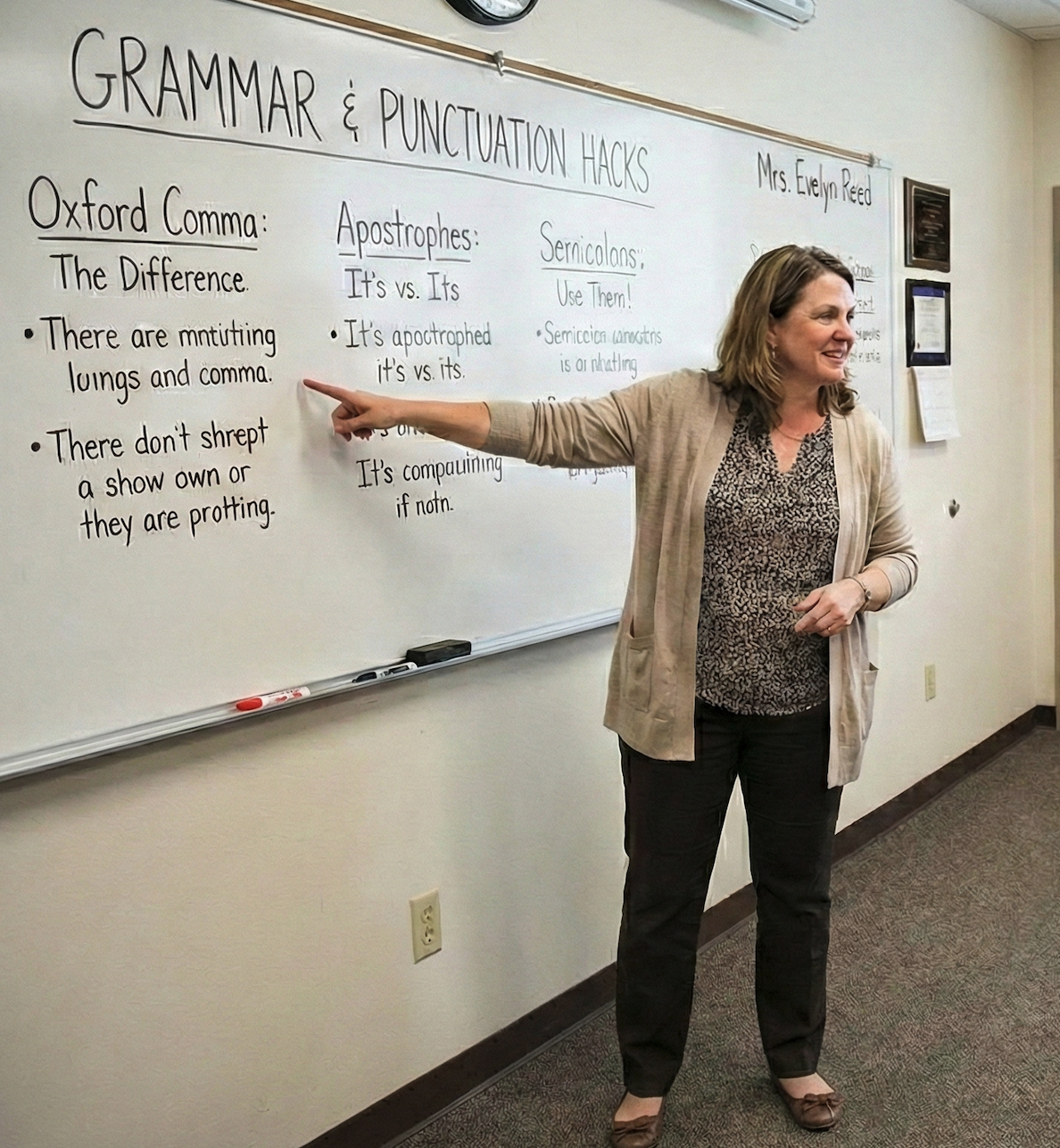
The Apostrophe Rule (It’s vs. Its)

Do not confuse contractions with possession.

  • With Apostrophe (It's / They're): This is a contraction for "It Is" or "They Are."
  • Without Apostrophe (Its / Their): This is possessive (belongs to it/them).

The Shortcut: Replace the blank with "It Is."

  • Does the sentence make sense? -> Use It's.
  • Does it sound broken? -> Use Its.

2. Modifier Questions

Identification: Grammar questions with very long answer choices.

These questions test one simple concept: The description (modifier) must be right next to the thing it is describing.

The Process

  1. Read the Modifier: Read from the beginning of the sentence up to the blank (or comma).
  2. Identify the Target: Ask yourself, "Who or what is this describing?"
    Example: "Drawing water from a stream..." -> Who draws water? A human.
  3. Find the Match: Look at the answer choices. The first word of the correct answer must be the noun you identified.

The "Apostrophe Trap"

Be careful with possessive subjects.

  • Incorrect: "Written by the author, the novel's plot..."
  • Correct: "Written by the author, the novel..."

If the answer starts with "The author's novel," the subject is the Novel, not the Author. Ensure the modifier is describing the book, not the person.

Rare Exception (The Double Modifier): If two answers look correct (e.g., both start with the correct name), check the end of the sentence. Sometimes there is a second modifier at the end, and the subject must make sense with that description too.

3. Plural and Possessive Questions

Identification: You see a variety of apostrophes in the answer choices (e.g., dog's, dogs', dogs).

The Process

Do not guess. Follow this two-step check.

Step 1: Check for Possession (The Apostrophe Check) Look at the word immediately following the blank.

  • Is it a Noun? Does it make sense for that noun to belong to the subject? -> You NEED an apostrophe.
  • Is it a Verb (action), Preposition, or Punctuation (comma/period)? -> NO apostrophe.

Example: "The poems effectively written..." -> "Written" is a verb. You cannot possess a verb. Eliminate all answers with apostrophes.

Step 2: Check for Plurality (Singular vs. Plural) If you determine you need an apostrophe, you must decide where it goes.

  • Word's (Apostrophe before S): Singular. One owner.
  • Words' (Apostrophe after S): Plural. Multiple owners.

The "Weird Look" Mnemonic:

  • Dog's: Looks normal -> Singular.
  • Dogs': Looks "weird" or unusual -> Plural.

Summary of the Protocol

  • Pronouns: Find the noun. Is it singular or plural? (Remember: Animals = "It"). Test "It Is" for apostrophes.
  • Modifiers: Read the intro phrase. Who is it talking about? Put that noun immediately after the comma.
  • Possessives: Check the next word. Is it a noun being possessed? If not, delete the apostrophe. If yes, check if the owner is singular or plural.

Knowing these rules is not enough—you must practice the process until it is muscle memory.

Prep Smart, Achieve More
*Try it For Free.
Oops! Something went wrong while submitting the form.