Get the weekly community digest





If you’ve ever finished a practice test and screamed internally, “Ugh, I knew that one!”, you’re not alone. Careless errors — or what we often call “stupid mistakes” — are the most frustrating part of prepping for the SAT. They’re the questions where you had the knowledge, but somehow still lost points. And when they pile up, they can derail an otherwise solid score. The real kicker? It’s not always about being more “careful.” If it were that simple, you'd already be doing it. So let’s unpack what actually causes these mistakes — and how to reduce them, for real.
This is the most common culprit. You solve for x when the question asks for 2x. You find the area of a circle instead of the circumference. You pick an answer that’s true but doesn’t actually answer the question. The SAT is designed to catch you on this. They know you’re in a hurry, and they’ll put the answer you’re most likely to get by mistake as one of the options.
The Fix: Underline what the question is actually asking for. Before you bubble in your answer, reread the last sentence of the question to make sure you’re solving for the right thing. It takes two extra seconds, but it can save you a lot of points.
You know how to do the math, but you add 2 + 3 and get 6. Or you drop a negative sign. These are the facepalm moments. They happen when you’re rushing or when your brain is on autopilot.
The Fix: Use your calculator. Even for simple math. The digital SAT has a built-in Desmos calculator, which is incredibly powerful. Use it. It’s not a sign of weakness; it’s a sign of being smart and strategic. Also, write down your steps. It’s easier to catch a mistake when you can see your work laid out.
Words like “not,” “except,” “least,” and “most” can completely change the meaning of a question. It’s easy to gloss over them when you’re reading quickly.
The Fix: Circle or highlight these words. Make them jump out at you. When you see one, slow down and make sure you understand what it’s asking. For “except” questions, a good strategy is to go through the answer choices and find the three that do work. The one that’s left is your answer.
You see a diagram that looks like a right triangle, so you assume it’s a right triangle. You see a word in a reading passage and assume you know what it means in that context. The SAT loves to play on these assumptions.
The Fix: Don’t assume anything. If it’s not explicitly stated, don’t take it as a given. If a diagram says “not drawn to scale,” believe it. If you’re not 100% sure what a word means, look for context clues.
You finish a section with a few minutes to spare, so you just sit there. Or you go back and look at the questions you were unsure about, but you don’t re-check the ones you thought were easy.
The Fix: If you have extra time, use it. But don’t just reread the questions. Try to solve them a different way. For math, plug your answer back into the equation. For reading, find the exact line in the passage that supports your answer. This is a much more effective way to catch mistakes than just looking at your work and thinking, “Yeah, that looks right.”
This is the single most powerful tool for reducing careless mistakes. After every practice test, create a log of your errors. For each one, write down:
• The question number.
• Why you got it wrong (be specific — “misread the question,” “calculation error,” “didn’t know the vocabulary word”).
• What you’ll do differently next time.
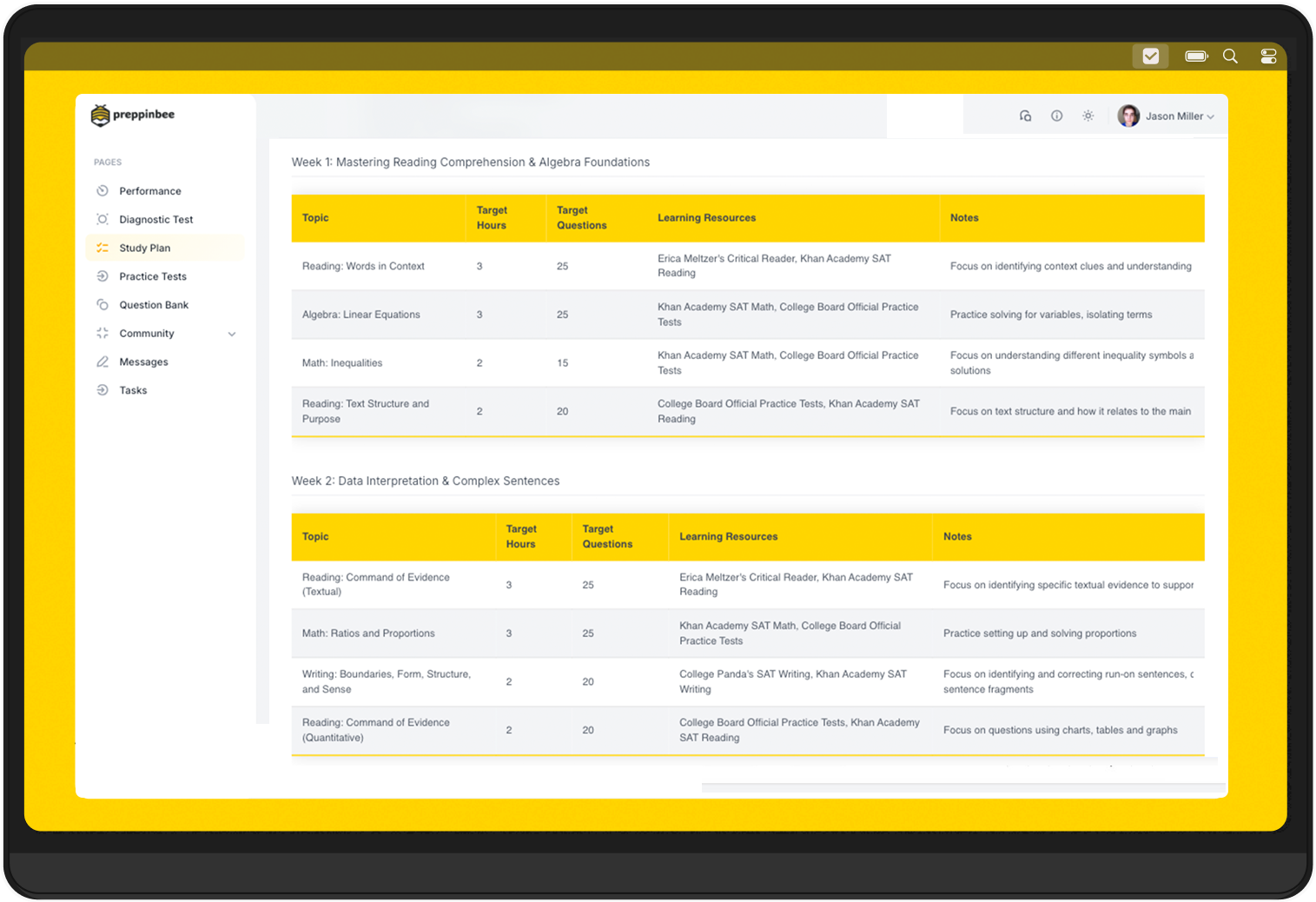
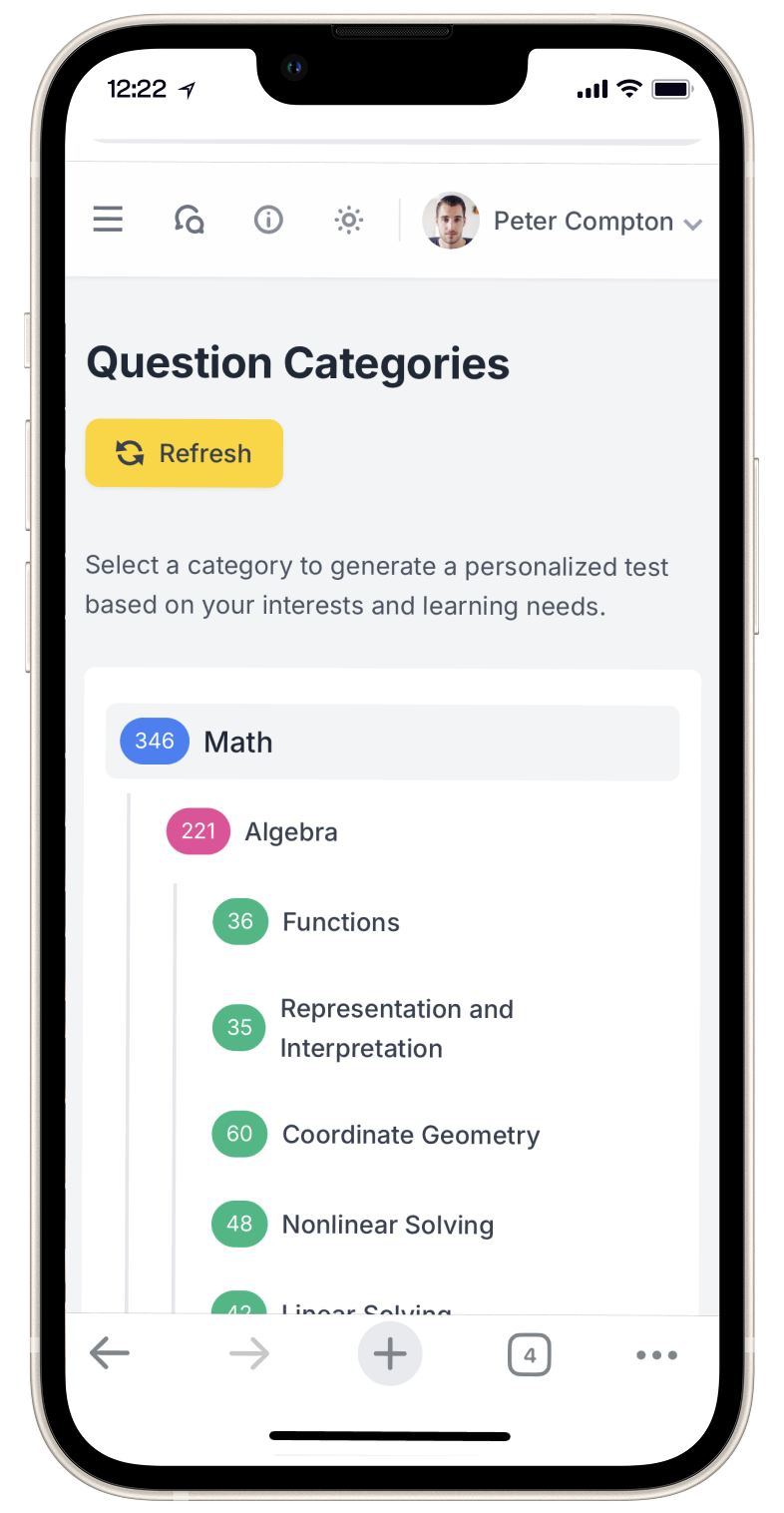
This forces you to confront your patterns. You’ll start to see that you’re not just making random mistakes; you’re making the same types of mistakes over and over. Once you see the pattern, you can work on breaking it. At Preppinbee, our platform helps you do this automatically. We analyze your performance, show you the types of questions you’re missing, and give you targeted practice to help you improve. Ready to turn those “stupid mistakes” into points? Sign up for a free trial and see how we can help.
Sign up for free now to access personalized study plans, practice tests and questions, vocabulary and tutorial bank, mistakes review, personalized tests and college admission tools and resources.