Get free SAT & ACT tips delivered weekly




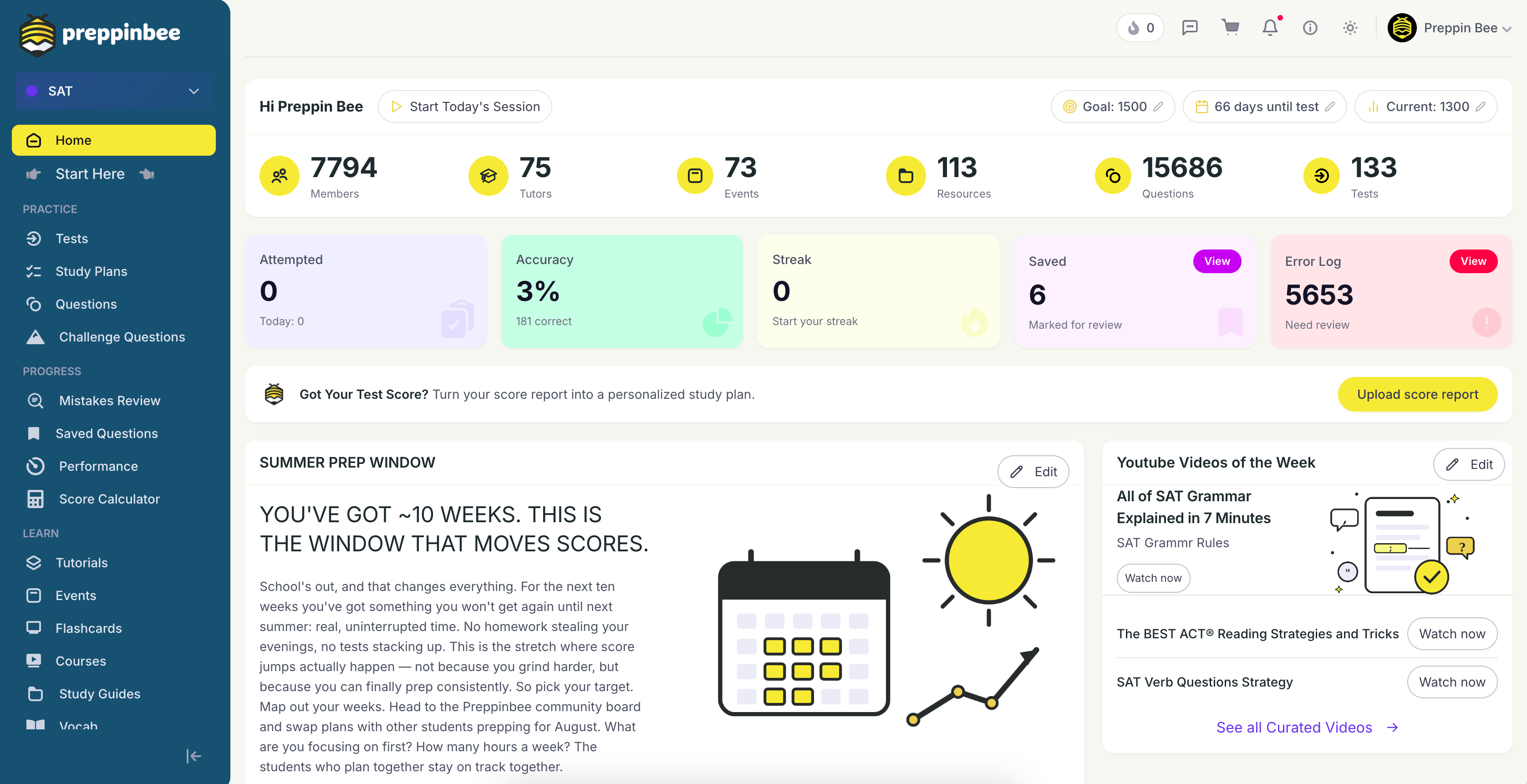
To study for the SAT effectively, take a diagnostic to find your weakest high-impact areas, practice those with real test-format questions, review every mistake to learn the reason behind it, and track progress so you always know what to work on next. Most students benefit from two to three months of consistent study — and targeting weak areas matters far more than total hours.
The best way to study for the SAT is to study by method, not by hours — diagnose your weak areas, practice them actively, and track progress. Most students prepare for the SAT the slow way: re-reading notes, doing random practice sets instead of full-length practice tests, and measuring effort in hours. It feels productive, but passive review and untargeted practice are exactly what cap scores. Improvement doesn't come from more hours — it comes from method.
The students who improve fastest do three things: they find their specific weak areas, they practice those actively with real questions, and they track progress so they always know what to work on next. This guide breaks that method down — and shows how Preppinbee builds it for you, free. If you want a human guiding the process, you can also work with a tutor.
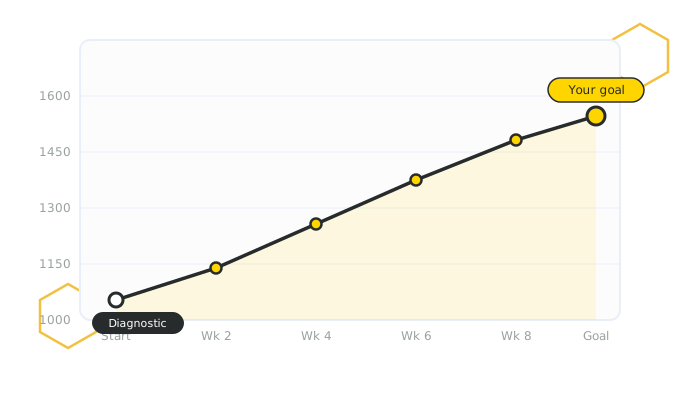
As a benchmark, most students prepare over 6 to 12 weeks: with 3–6 months available, roughly 8–10 hours a week is typical; with 1–3 months, 15–20 hours a week. What matters more than total hours is targeting weak areas — the College Board places no limit on how many times you can take the SAT, so steady, focused prep beats cramming.
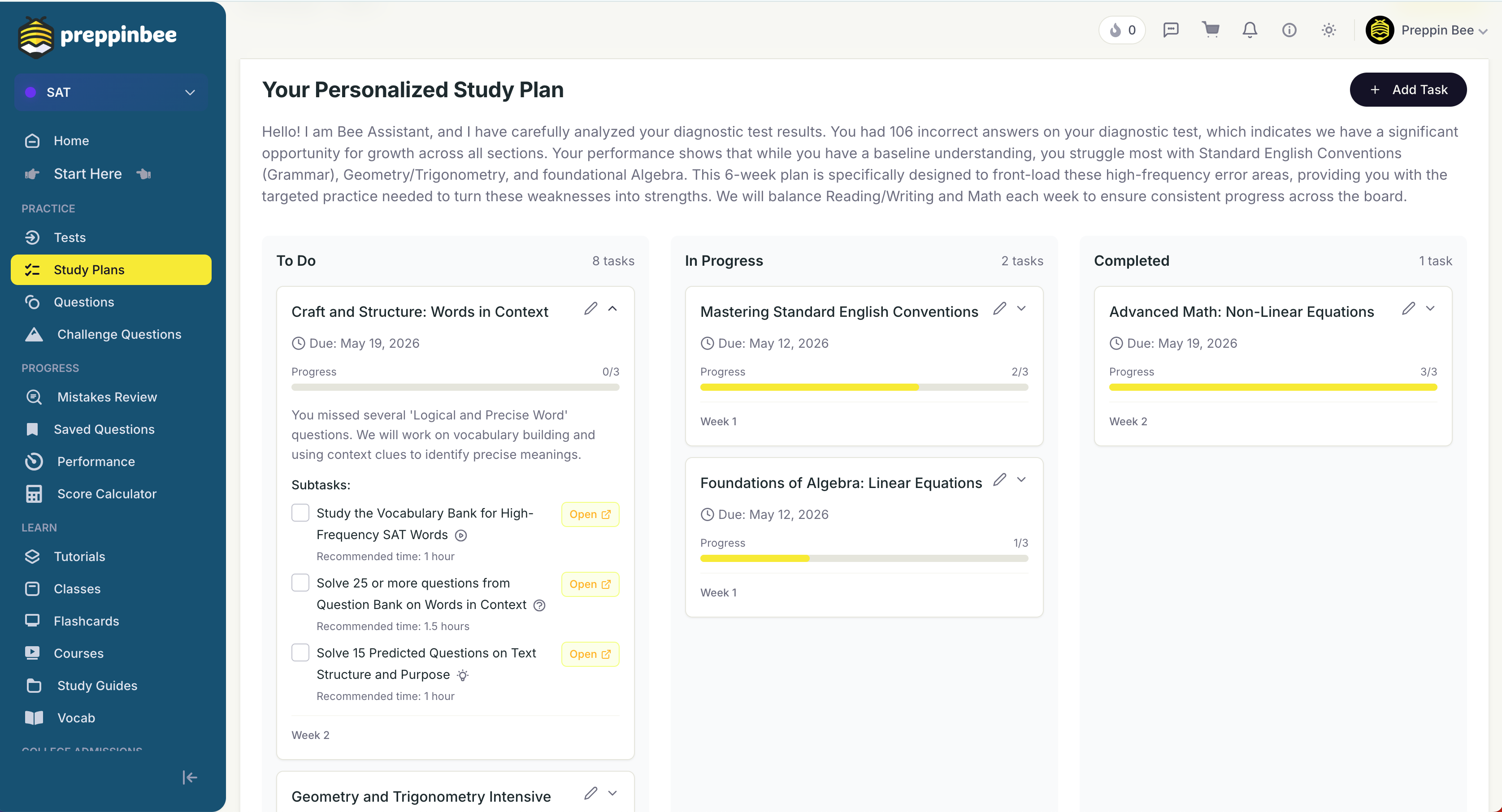
Take a diagnostic and our system analyzes your results, then builds a week-by-week plan that front-loads your highest-impact weak areas. You get specific tasks, recommended times, and progress tracking — the whole method above, done for you.
No premium tier, no credit card. Just a structured plan that adapts as you improve.
